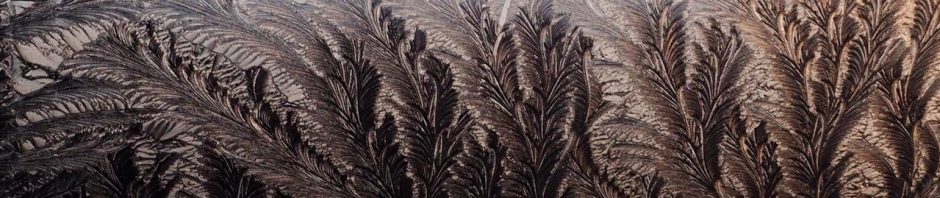
I bought a new light/small camera last year and never used it until to-day (Saturday 18th).
From Ffordes an Olympus OM-D10/12-40mm lens. I have to learn about it, no good sitting on the table!!! The Nikon is getting heavy, the OMD is much lighter and we rely on the iphone too much, so it is good to use a ‘proper’ camera now and again.
It was a grey day, odd bursts of sunshine which persuaded us to head out into the forest to try it out. It has been a relatively dry January so far, for sure the ground is sodden but the top surface is remakably dry. The East wind is doing its stuff.
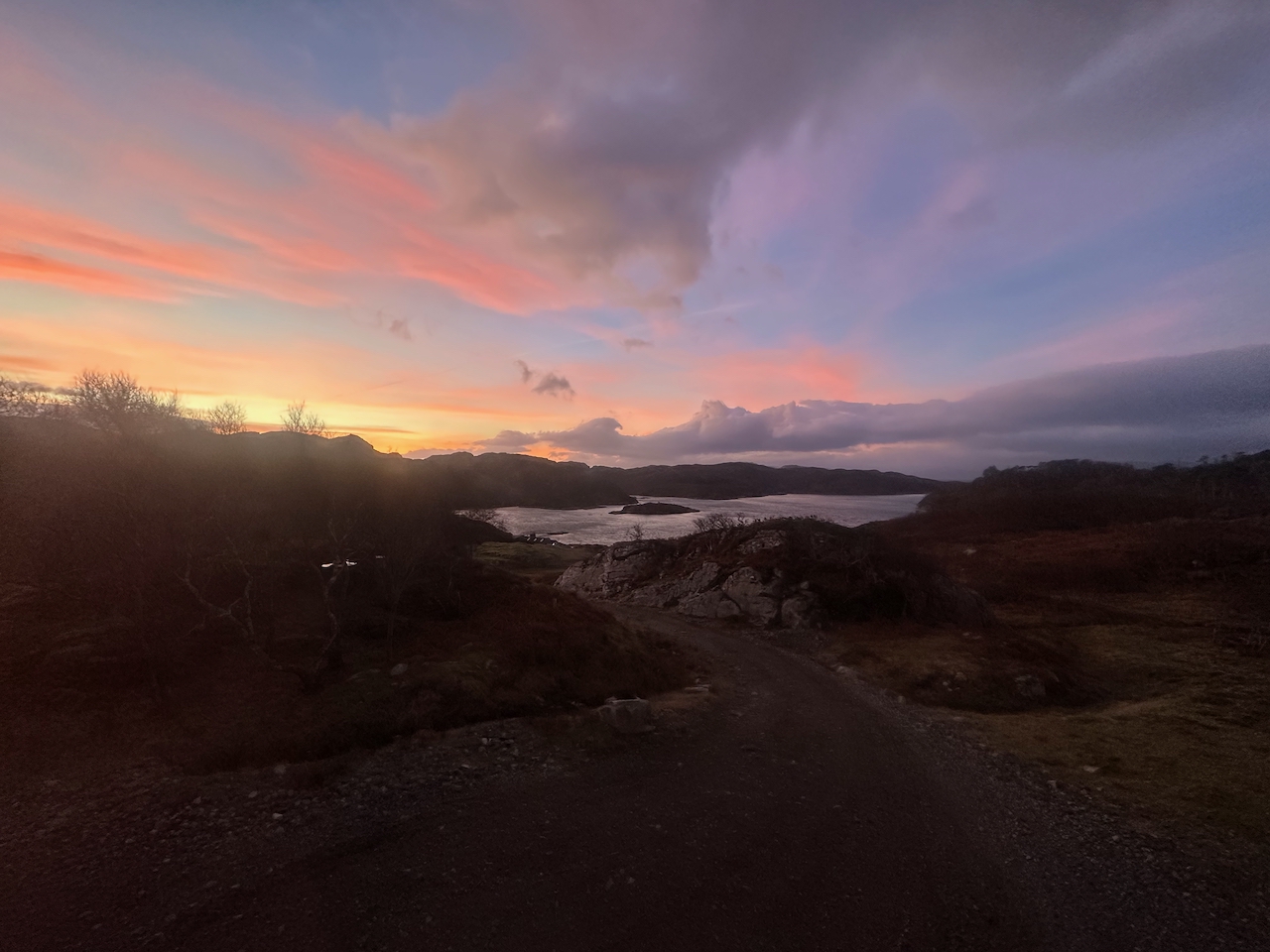
The day dawned red/pink a sign that we were to get weather, it turned out that it was only a gale. After lunch we took off to Dry Harbour and the Red Walk, starting out North but dropping into the largest area of ‘Natural’ forest on Rona. Always an interesting walk, more so wrestling with a new camera.
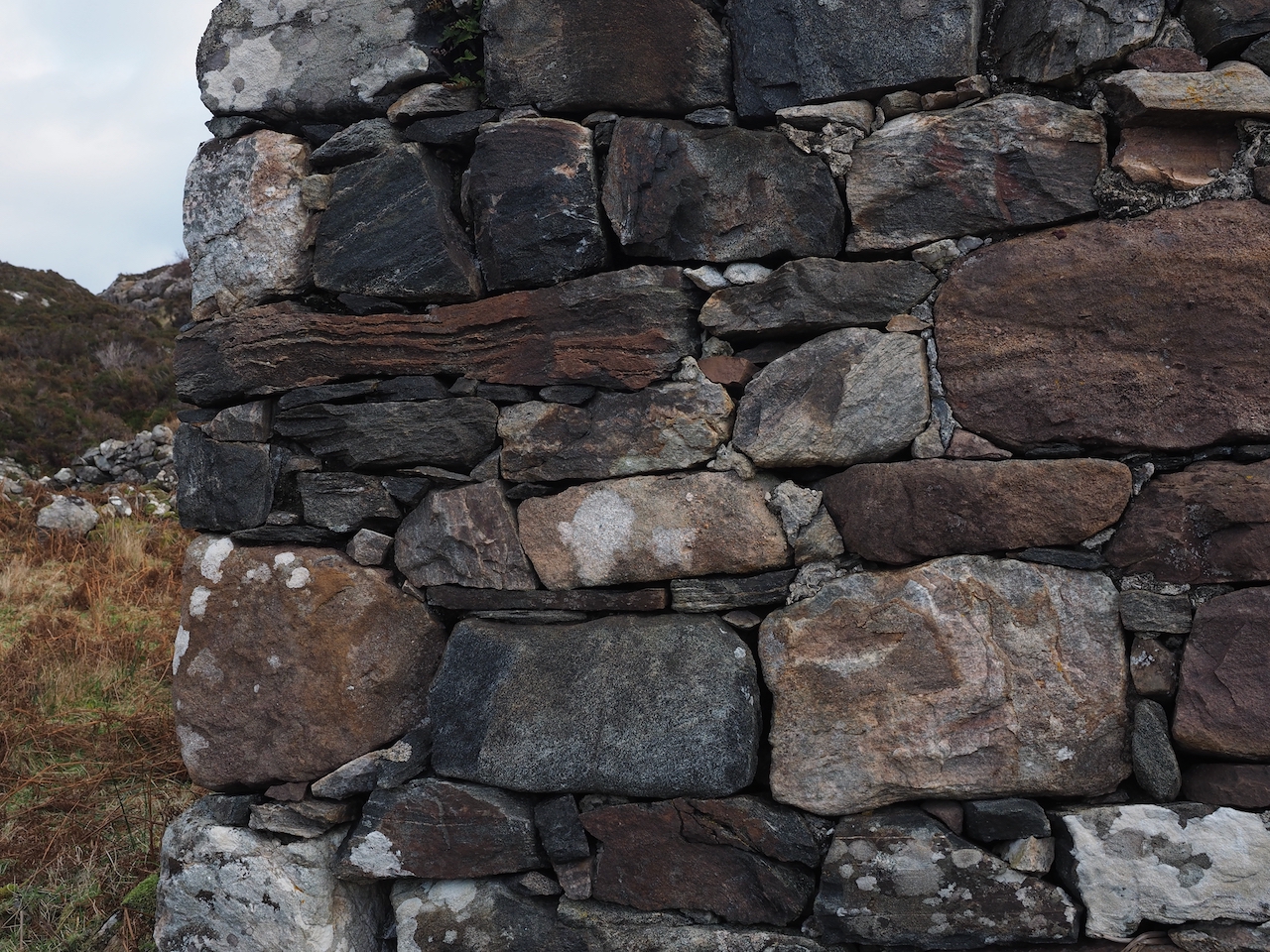

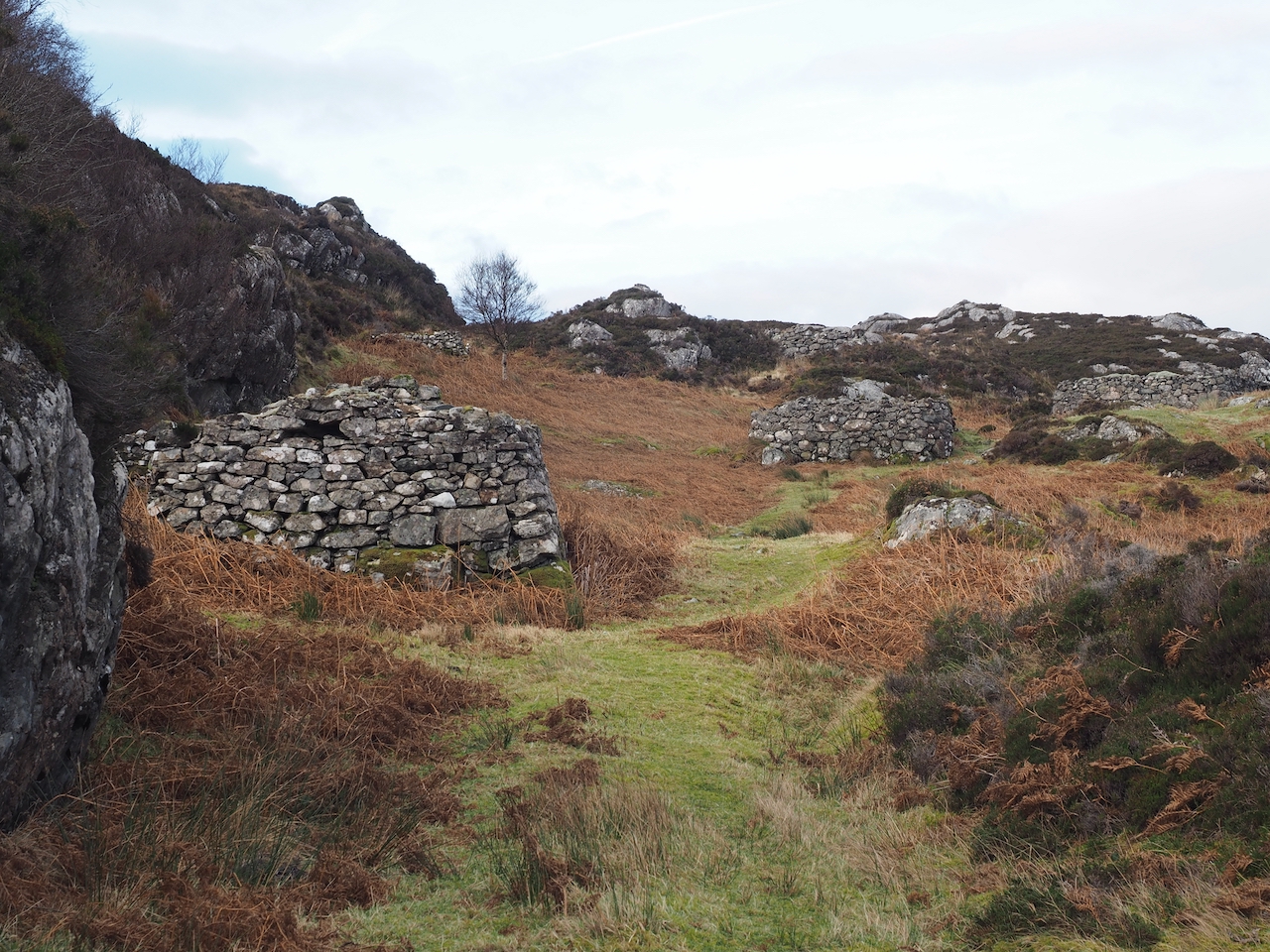
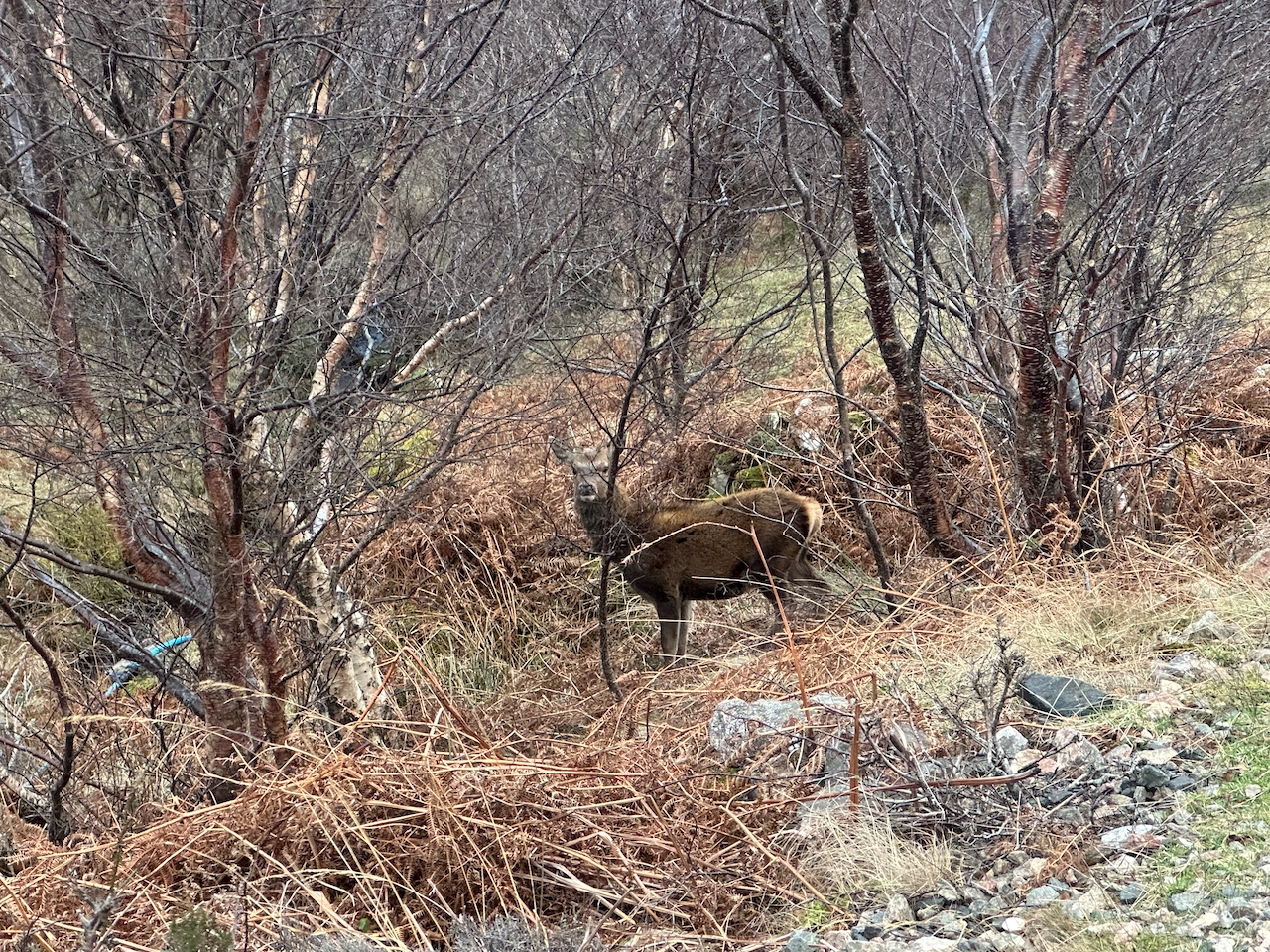
Despite the deer the trees are doing well, regeneration is so plentiful that our deer will graze on the trees but there is so much of it that they would struggle to have impact. For sure there are many bare areas where trees would really struggle and any shoots will be snapped up by the deer but do we really want an Island completely covered in dense Birch, I don’t think so.


Here’s a tree, how old? There is a definite timeline of people movement on Rona, therefore, no stock or no felling from 1929 when most of the population left. (although I think the folk back in the day, 1900s would be under pain of consequences if they did cut down a tree!!). The MacRae family did stay on but the Island was let out for the grazing much later when they left, apart from the MacRae families stock There would have been not much grazing until the 1950s (to be confirmed). I do not know the dates but various tenants had it with various amounts of stock (Sheep), therse gaps in tennancies enabled the Birch/trees, to get established and now to-day we have thick Birch in a lot of areas. But due to the infertile, thin soil they struggle in the marginal areas. To-day the deer manage the regeneration.
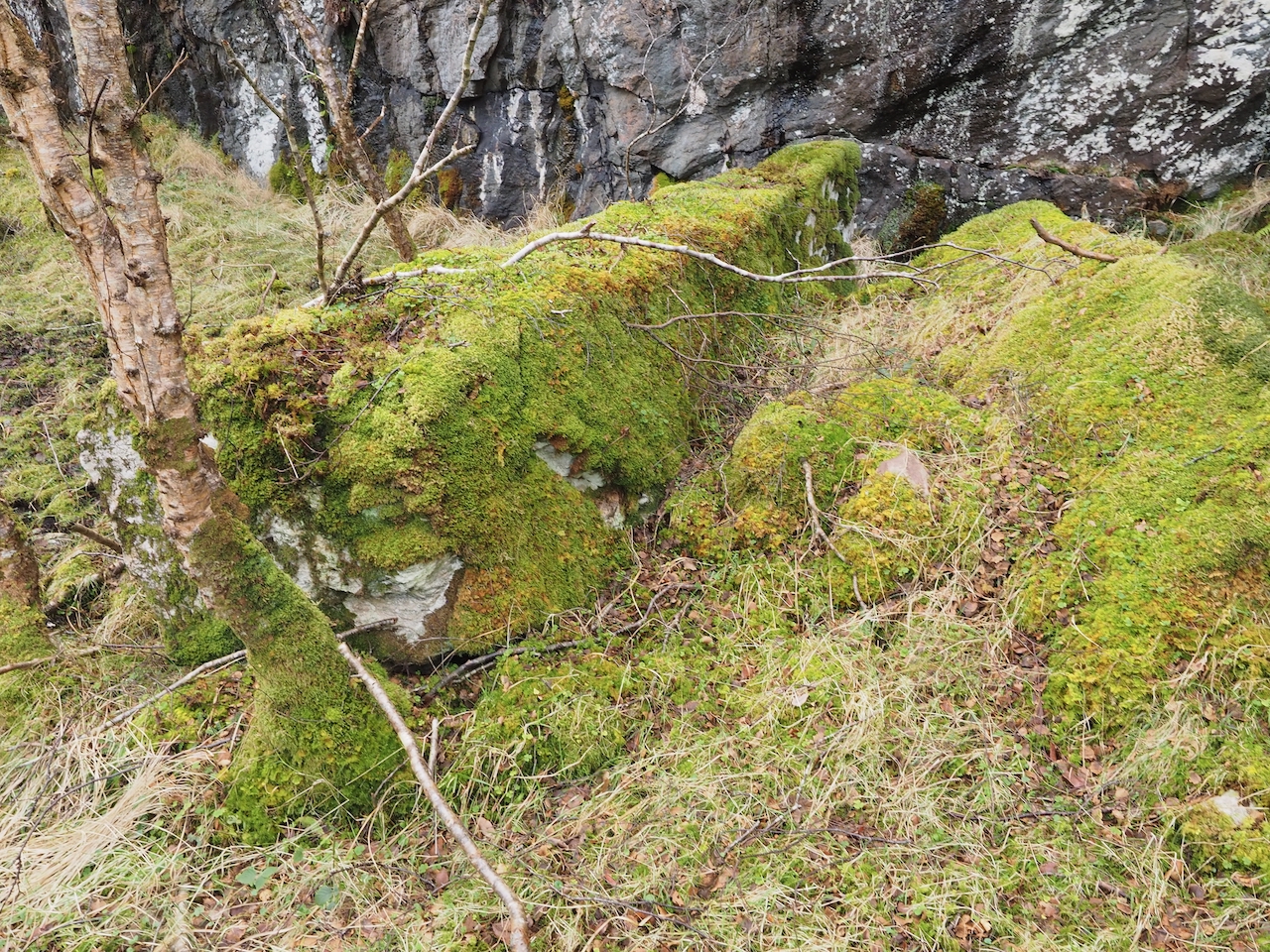

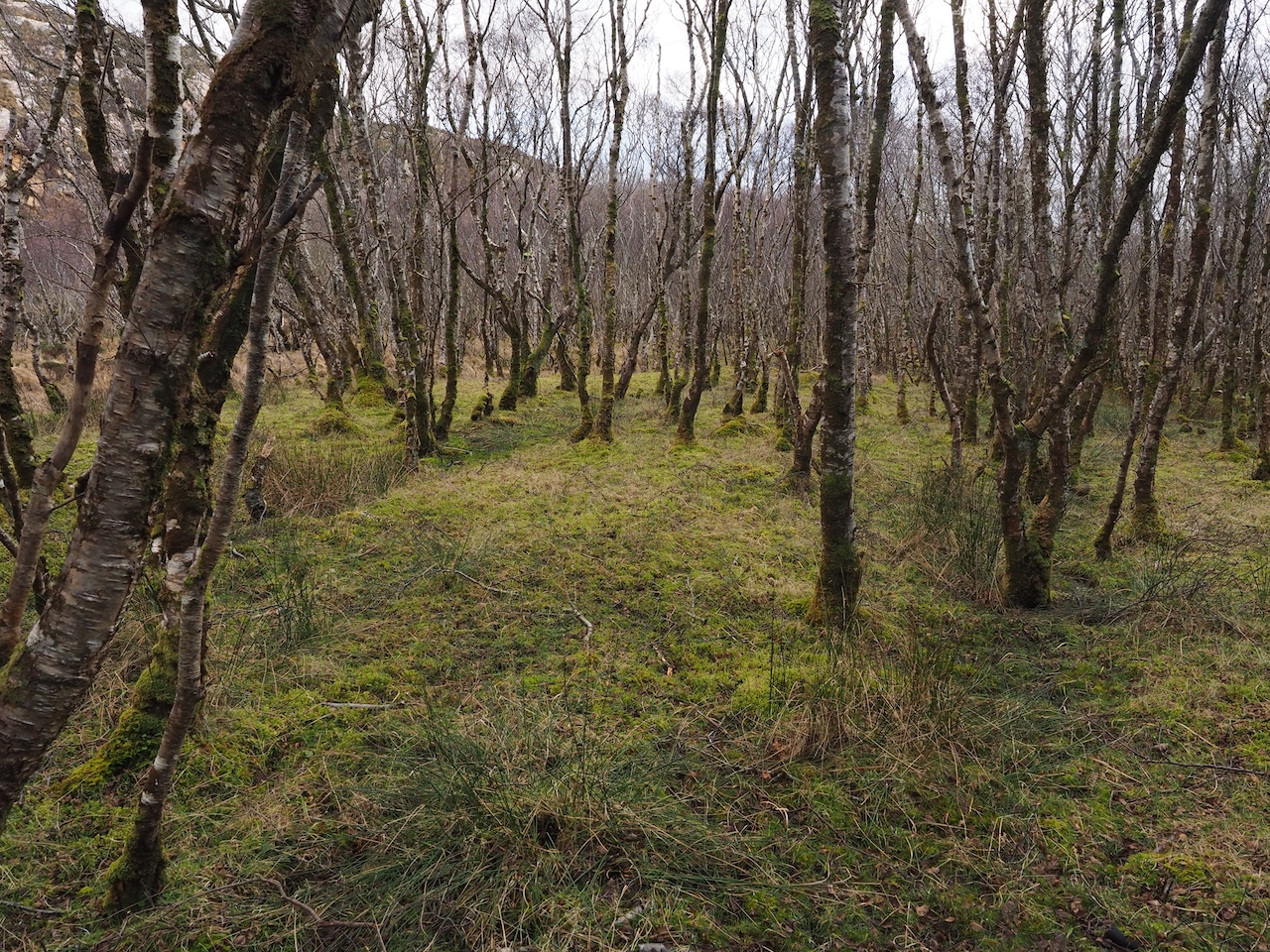
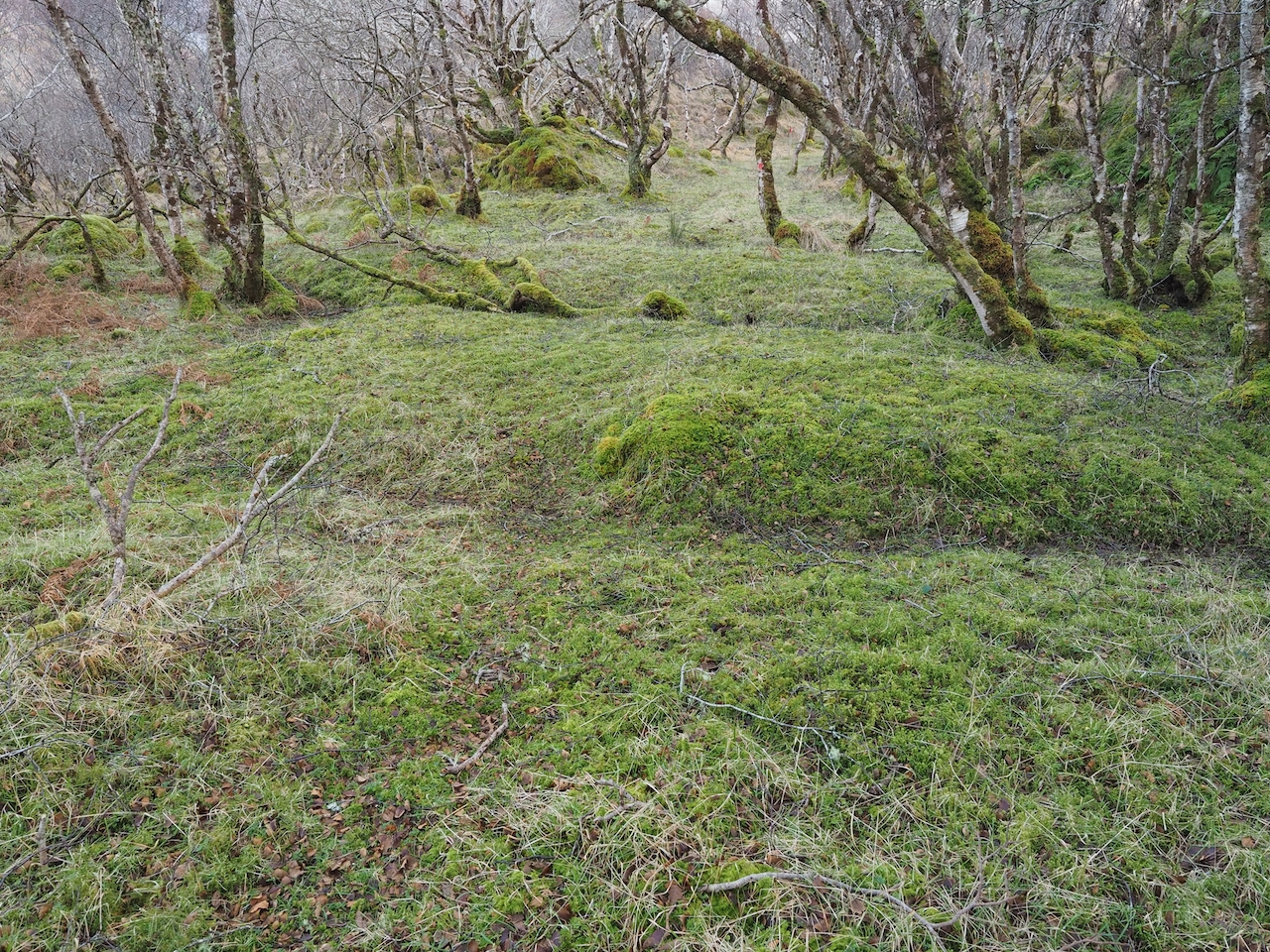
Walking off the main path onto the Red walk, from the North side you immediately come onto two things that catch your eye. One is a long 10 metre column of rock which has fallen off the cliff, now covered in moss, I do remember seeing it bare? Is that a reflection on the damp climate that has been my life for 23 years here? I might have a photo back in analogue days of the column. Then there in front of you are Runrigs, the old system for growing crops. With 200 folk here anything that resembled fertlity (and I can assure this ground is certainly not, but better than most) was turned over, fertilised (seaweed no doubt) and put into production. Tough days and always a source of amazement what these residents went through to survive. Of course the Birch has reclaimed it all and now we have a dense forest with nothing much growing below, blame the deer but the deer have nothing to do with it. The forest floor is shaded out and there is little growth there now, what is there, mostly grasses, suits the deer very well.
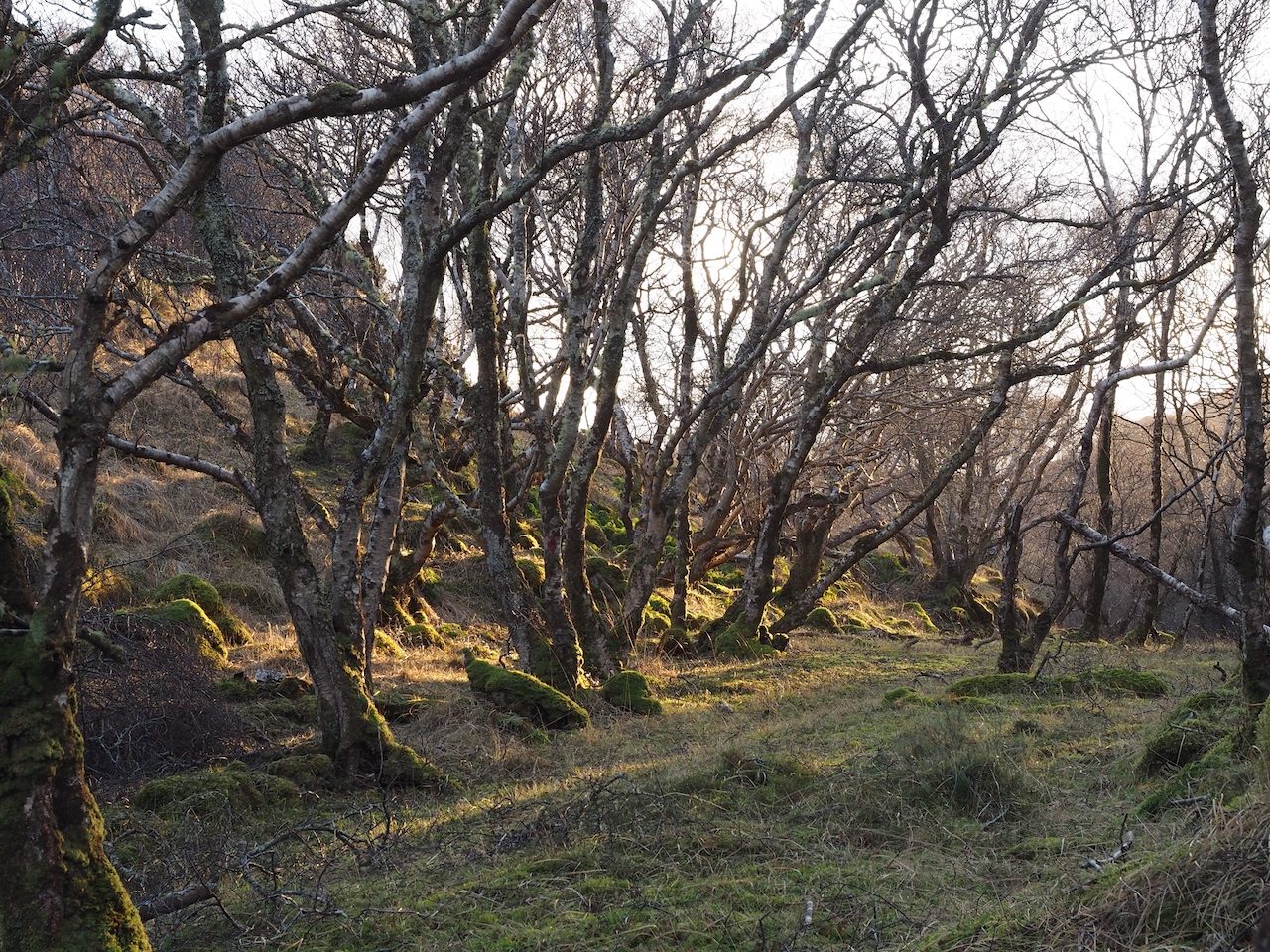
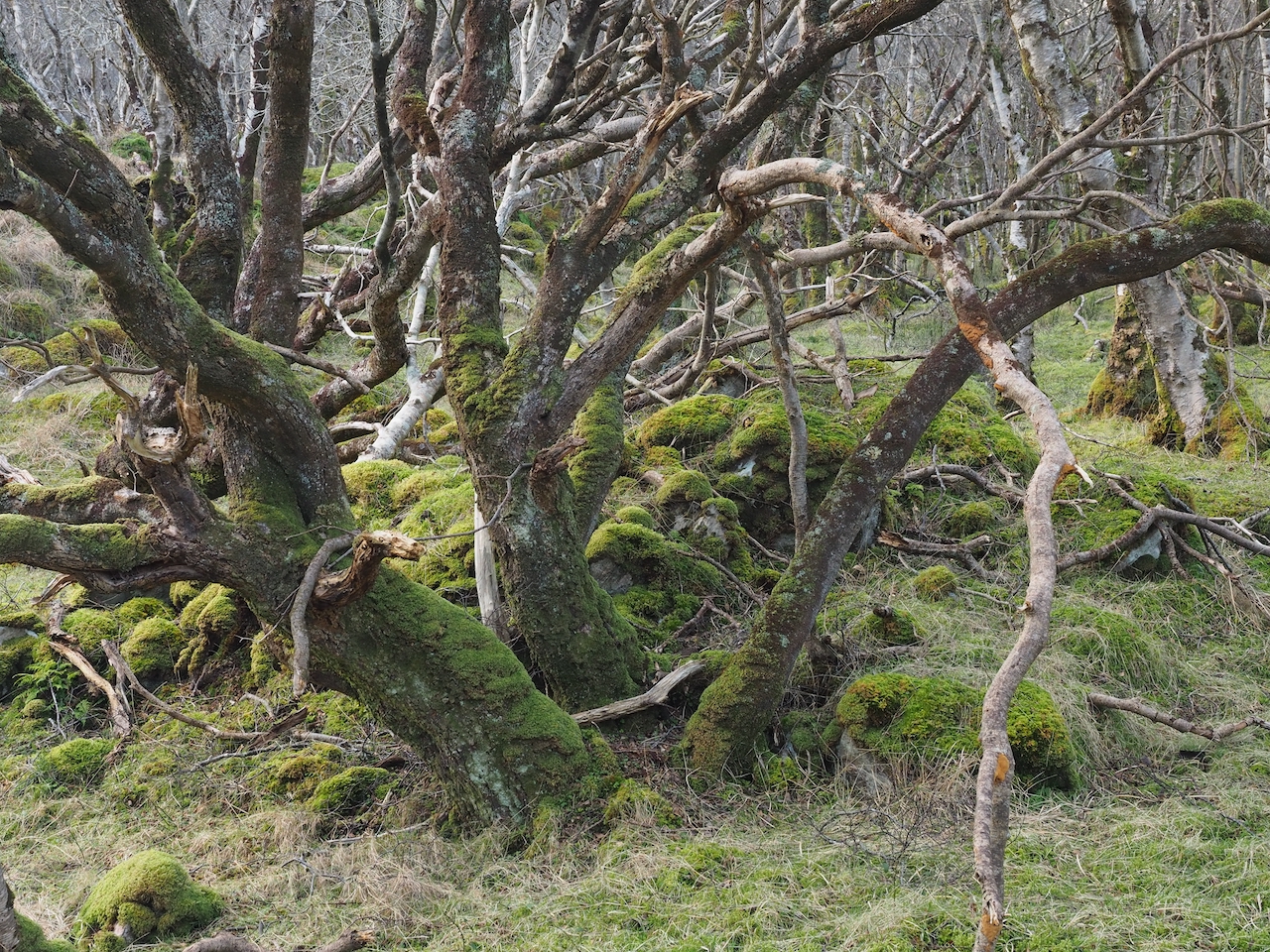

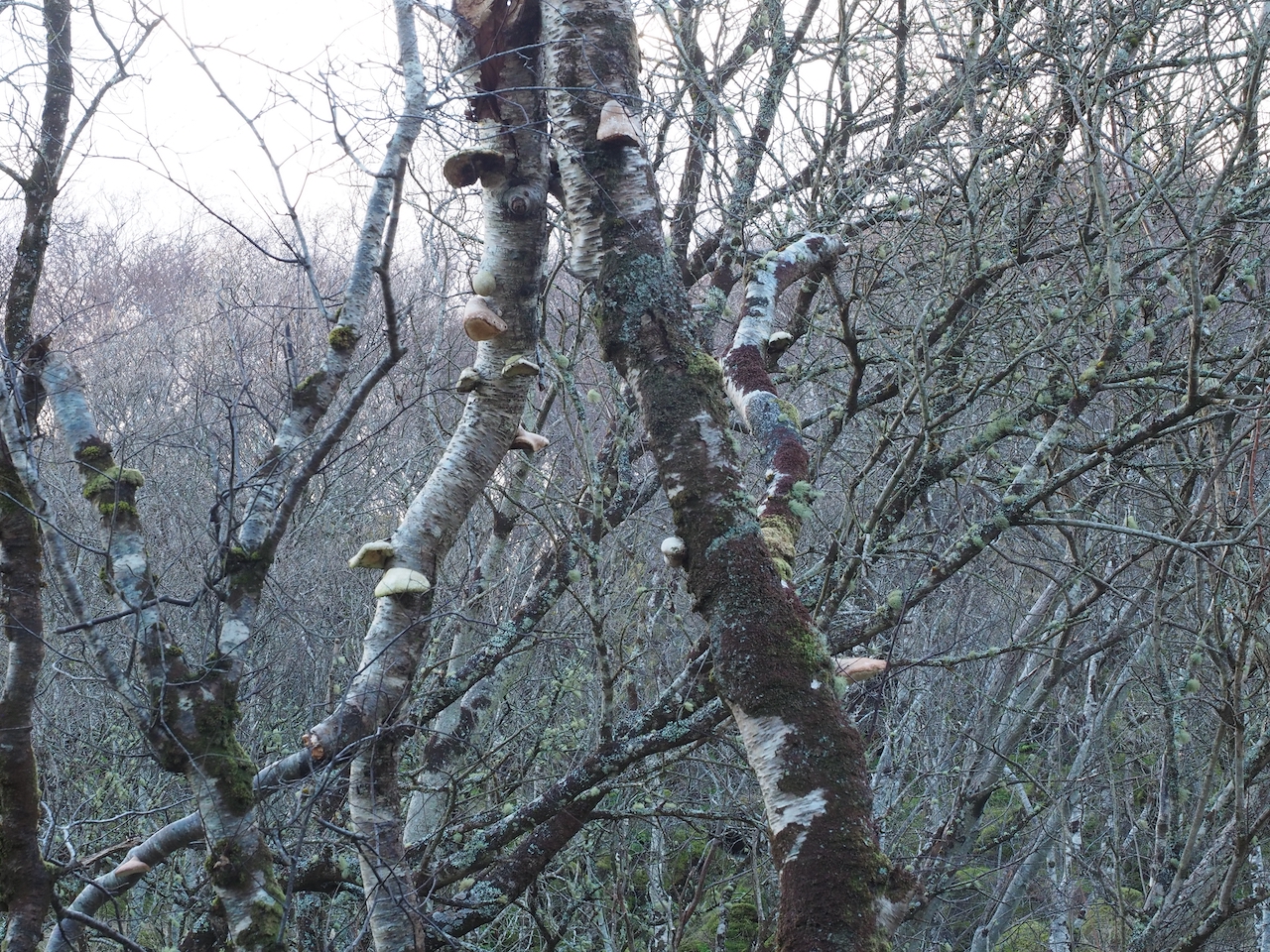
Heading further along the ‘track’ it seems this forest must have been what they describe as the farmed area. Difficult to imagine to the untrained eye but everything here was drained and worked to provide food for the residents, abandoned in 1929, it is truly amazing how nature has reclaimed the area. Drains blocked, bogs abound, various ages of Birch, odd others, Rowan, Holly, Willow, a very odd Scots Pine holding on, lots of fallen trees, an insect heaven, but underneath it all an amazing amount of ground flora.


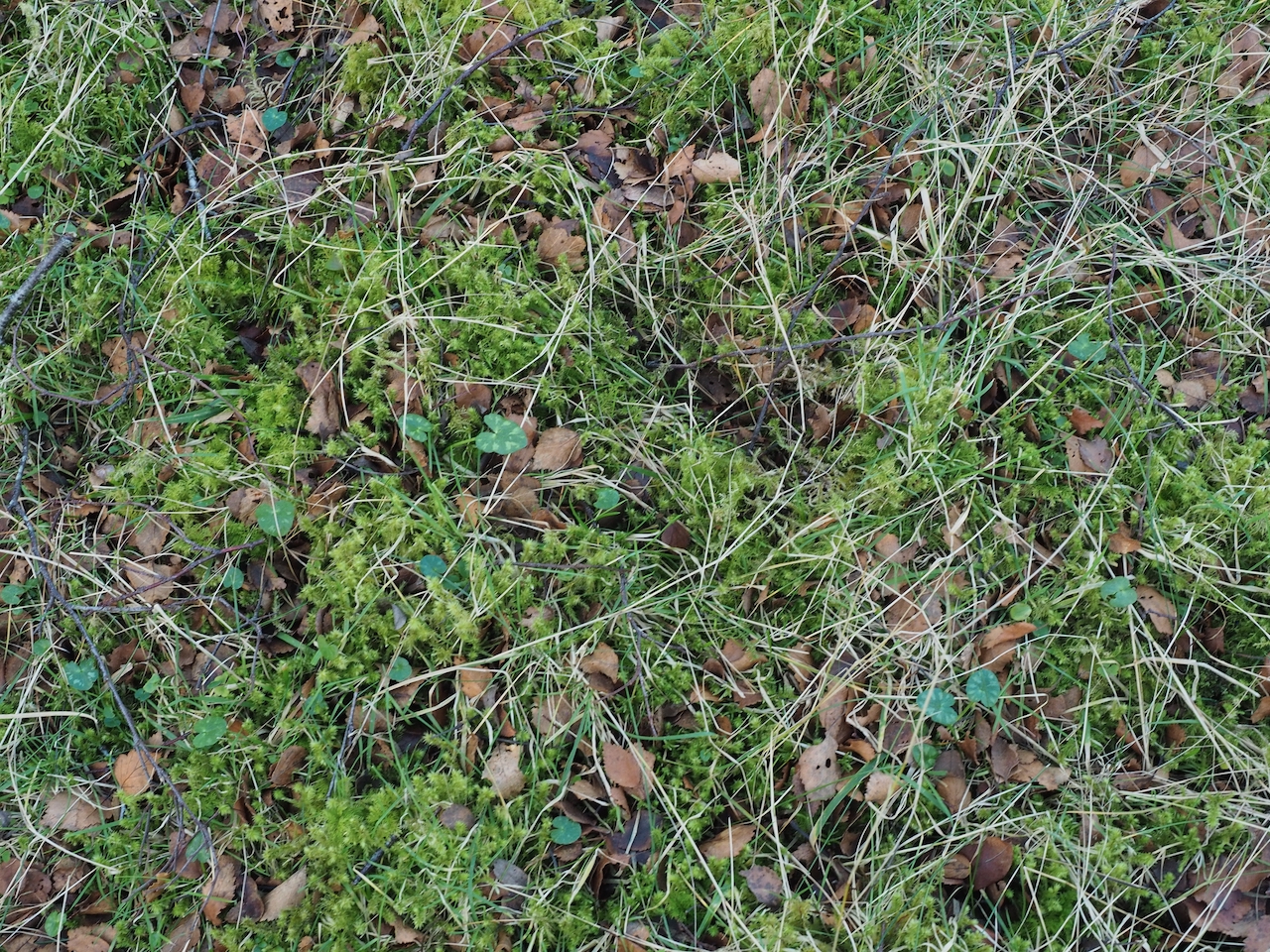
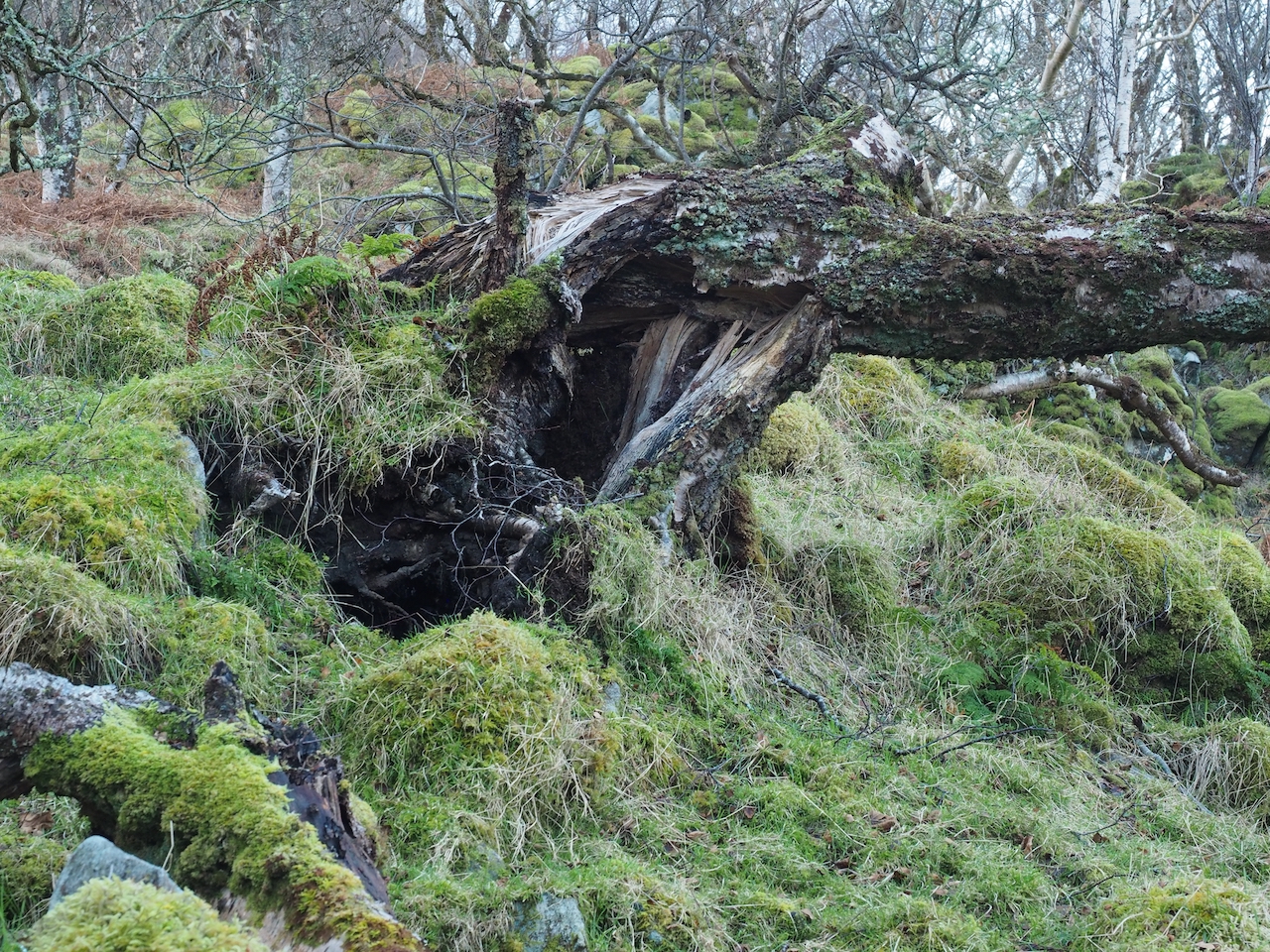
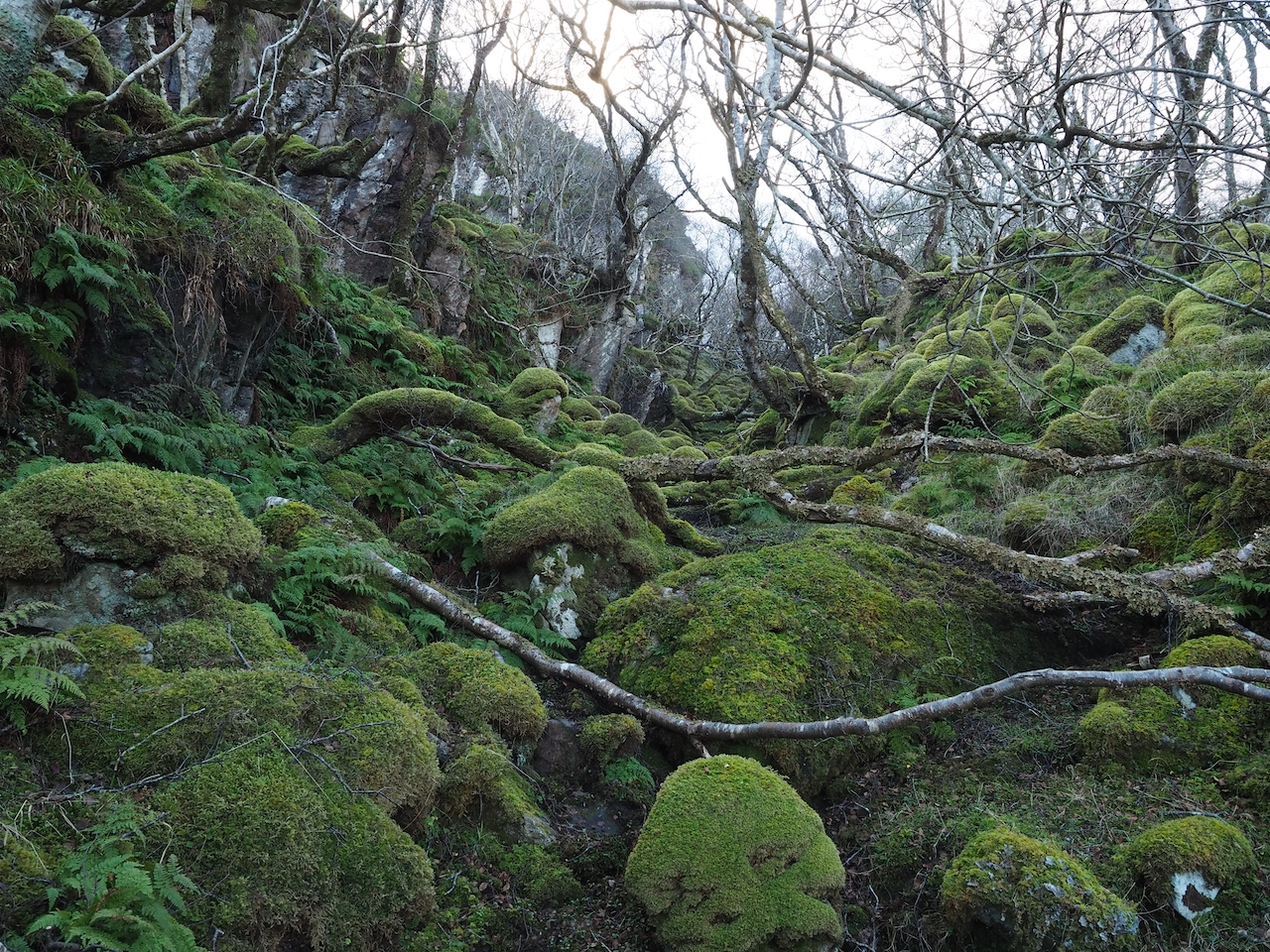

Having reached the East Coast we turned West and made our way up through more old blown Birch, no doubt undermined by the rain this last few years big trees that most likely the ground could not support. Sad that we cannot get them out for firewood, too wet and no real path for quads and trailers.
Nearer the cottages we come across this rock, Torridonian Sandstone, left by the Glacier, many, many years ago. There are quite a few perched here and there on Rona.

My favourite tree next, there are a few I like but this one intrigues me as it feels like in the face of adversity it has survived, thrived and is quite strong, long may it live growing out of the rock.
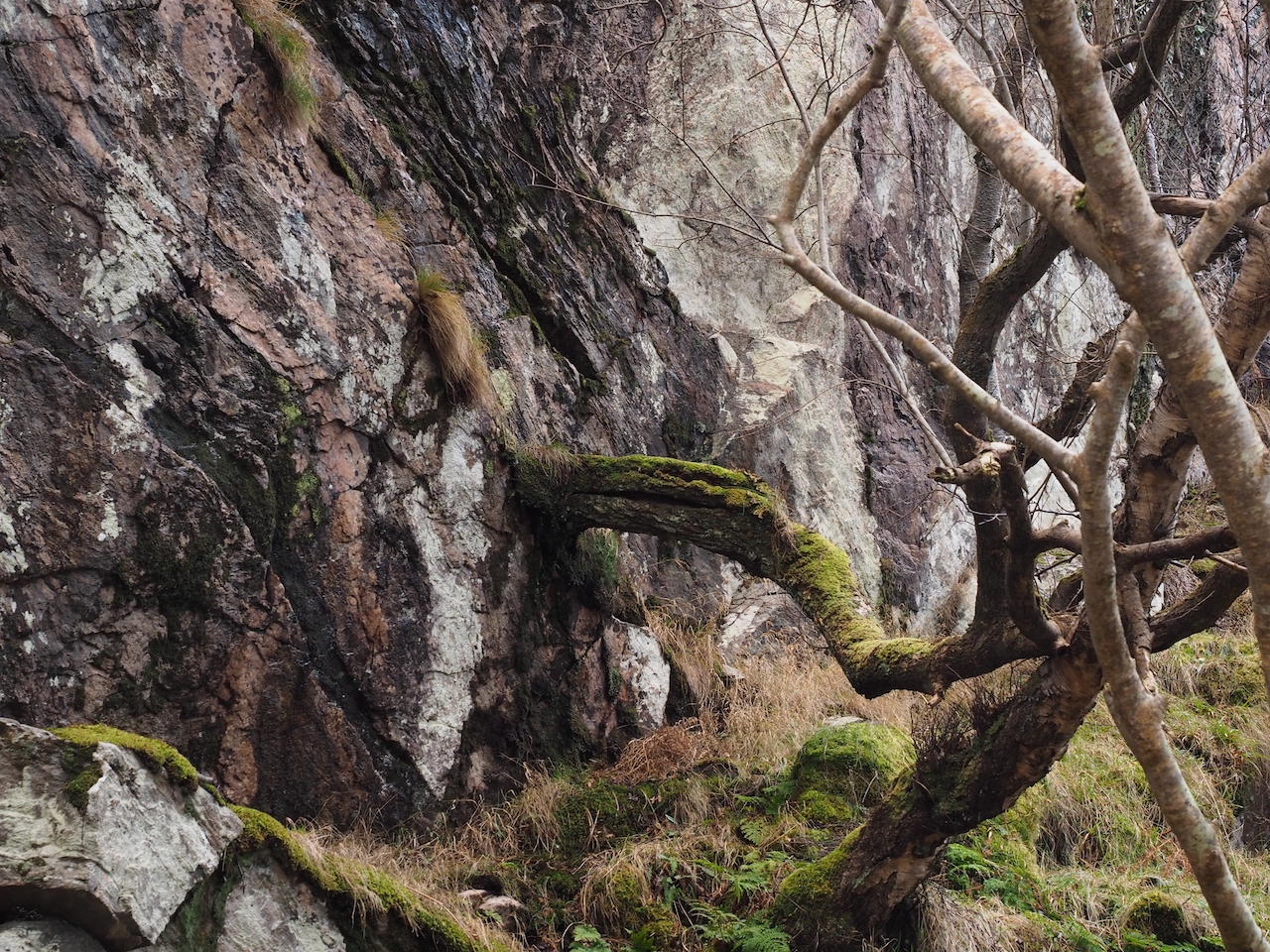
Lorraine’s favourite tree just beside it, anotrher Willow with a little help from a HoneySuckle.
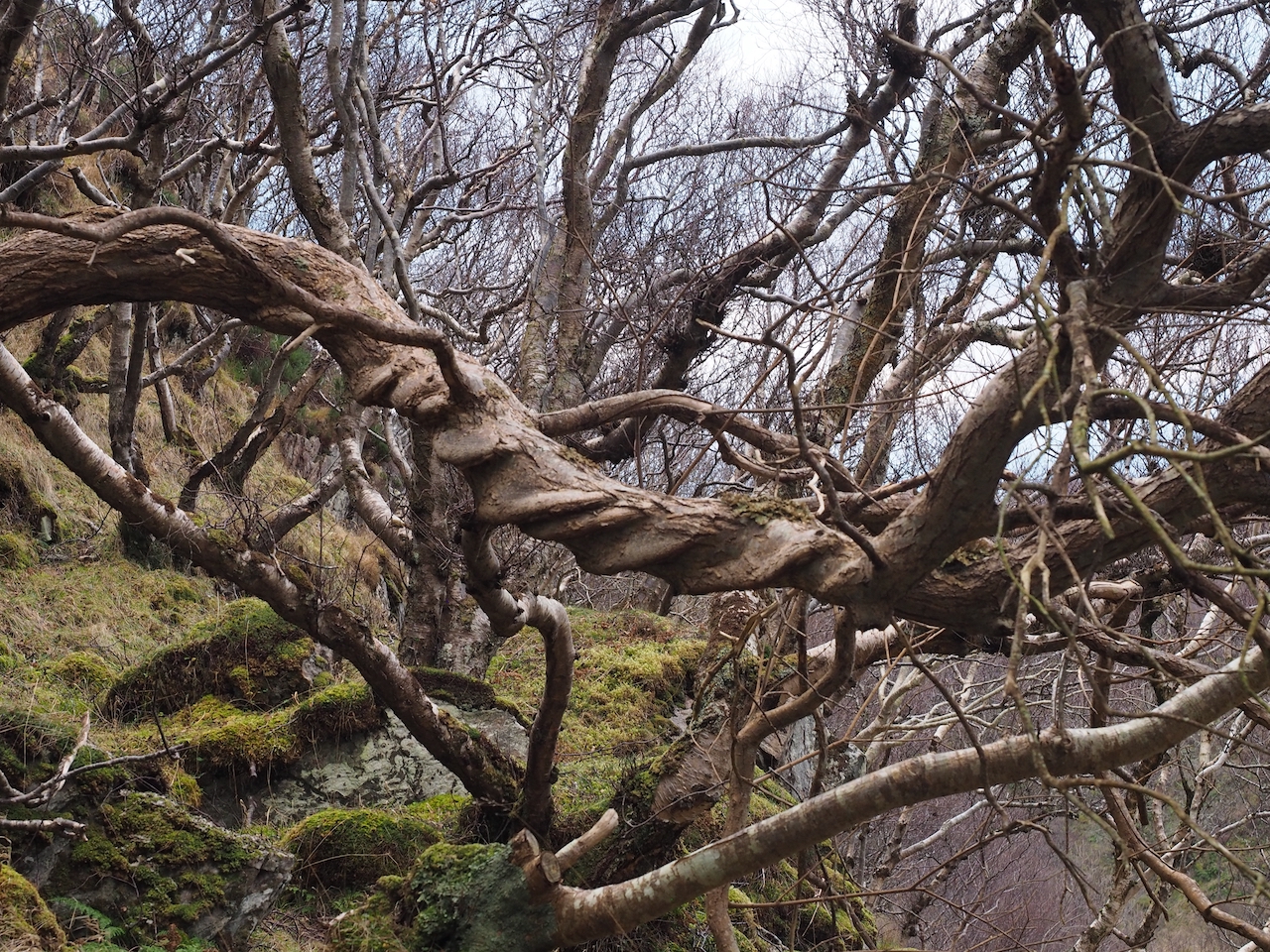
All in all a good 2 hour walk, always very interesting and peaceful. Not many birds, they have mostly left for better climes but the Wrens, Robins, Blackbirds and of course the Chaffinches work away, plenty Woodcock flushing and the Seagulls feeding off shore was a delight in heavy seas. No doubt the Northern Divers are there too. The Bullfinches seem to be scarce these last few years, they used to be here all year round but a sighting is rare nowadays. perhaps the Goshawk which arrived about a decade ago likes them.

Seems to be quite a bit of life at sea just now with Humpbacks, Dolphins and a report of a Sperm Whale South of Raasay. There must be fish when you see a flock of seagulls on the water in these numbers, a good sign.
Folks like to call this type of woods a ‘RainForest, for sure it rains a lot but Rainforest, seriously?
Here is a thought on Rainforests I picked up lately, it sums that statement for me.
“Rain forests are called rain forests because they make their own rain under normal climatic conditions. What they are talking about is wet woodland. It is woodland that grows somewhere that it rains a lot. It is like so many things associated with the exploitation of the countryside by carpet bagging pseudo conservationists, fake. Forestry is a rich source. An ancient woodland can be a modern wood planted where an ancient wood used to grow. It never ends.”
And so it is a few observations and a thought on rainforests.

 isleofronalog